
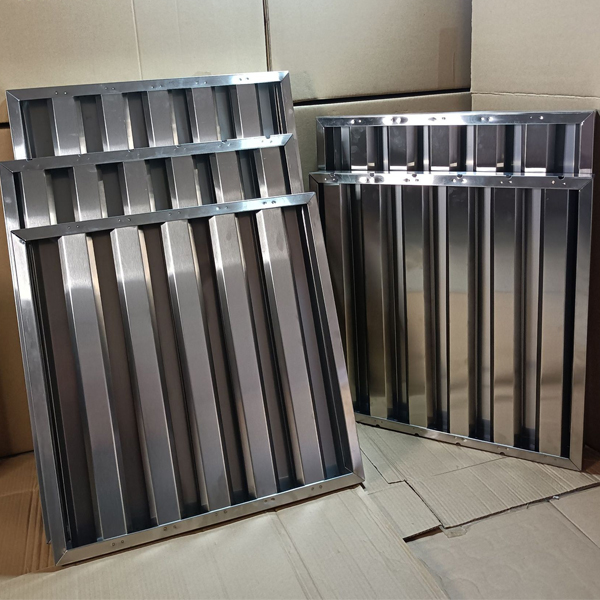
Why choose a stainless steel hood filter but not an aluminum one?
I. Durability: Stainless Steel Far Outperforms AluminumStainless Steel (304/316): Possesses high strength and excellent rigidity; it resists deformation and structural collapse even after prolonged use. Highly impact-resistant, it can withstand vigorous scrubbing during cleaning and is unlikely to bend or dent.Aluminum Filters: Characterized by a soft texture and low structural strength. They are prone to deformation, denting, and edge warping when exposed to heat or heavy pressure. The mesh pores can easily become flattened, thereby compromising smoke extraction and filtration efficiency.Lifespan Comparison: Stainless steel typically lasts 5–10 years. Aluminum filters generally require replacement every 1–3 years—or even less than a year in environments involving frequent, high-heat stir-frying.
II. Corrosion and Oxidation Resistance: Stainless Steel is Virtually Maintenance-FreeStainless Steel: Features a dense chromium oxide passivation layer on its surface, providing exceptional resistance to grease, moisture, acids, and alkalis. It remains rust-free, does not blacken, and resists perforation even after prolonged use. Grease and grime rinse away instantly; the material does not absorb stains or retain stubborn residue.Aluminum Filters: Highly susceptible to oxidation and corrosion, often turning black over time. Prolonged exposure to cooking fumes and cleaning agents can cause the surface to turn white, shed powdery residue, or even perforate. Grease tends to seep into the oxidized surface layer, making the filter appear dirtier with every wash and making it difficult to restore to its original color.Cleaning and Maintenance: Stainless steel is dishwasher-safe and can withstand high-pressure rinsing or light scrubbing with a steel wool pad. Aluminum filters, conversely, require gentle wiping with a soft cloth; they must not be placed in a dishwasher or cleaned with strong alkaline detergents, as doing so will accelerate their deterioration.
III. Heat Resistance and Safety: Stainless Steel is Ideal for High-Heat Stir-FryingStainless Steel: Highly heat-resistant (with a melting point of approximately 1400°C). It does not deform, soften, or release harmful substances even after prolonged exposure to high temperatures. It is non-flammable when exposed to open flames and acts as a fire barrier, preventing flames from spreading into the exhaust duct—thereby ensuring greater safety.Aluminum Filters: Possess a low melting point (approximately 660°C). The intense heat generated during high-temperature stir-frying can cause them to soften, deform, or even partially melt. Furthermore, they pose a fire hazard, as open flames can easily ignite accumulated grease on the filter surface.
IV. Filtration Efficiency and Exhaust Flow: Long-Term StabilityStainless Steel: Features a stable structure; the mesh retains its shape over time without deformation. It maintains consistent grease separation efficiency (approximately 70%–85%), ensures smooth exhaust flow, and is unlikely to obstruct the airflow channel due to structural distortion.Aluminum Filters: Prone to deformation and mesh collapse after prolonged use. This leads to reduced filtration efficiency, increased airflow resistance, and slower exhaust speeds. It also increases the risk of grease backflow, places a heavier load on the motor, and results in increased noise levels.
V. Long-Term Cost: Stainless Steel is More EconomicalStainless Steel: Requires a slightly higher initial investment; however, its long lifespan, freedom from frequent replacement needs, and low maintenance costs make it the more cost-effective choice in the long run.Aluminum Filters: Low unit price, but require frequent replacement and incur high maintenance costs. Over a 3–5 year period, the total expenditure often exceeds that of stainless steel filters.
VI. The Only Two Advantages of Aluminum FiltersAffordable Price: For filters of the same size, the cost is typically 30%–50% lower than that of stainless steel filters.Lightweight: Easier to install and remove, making it suitable for range hoods with lower suction power (<500 CFM).